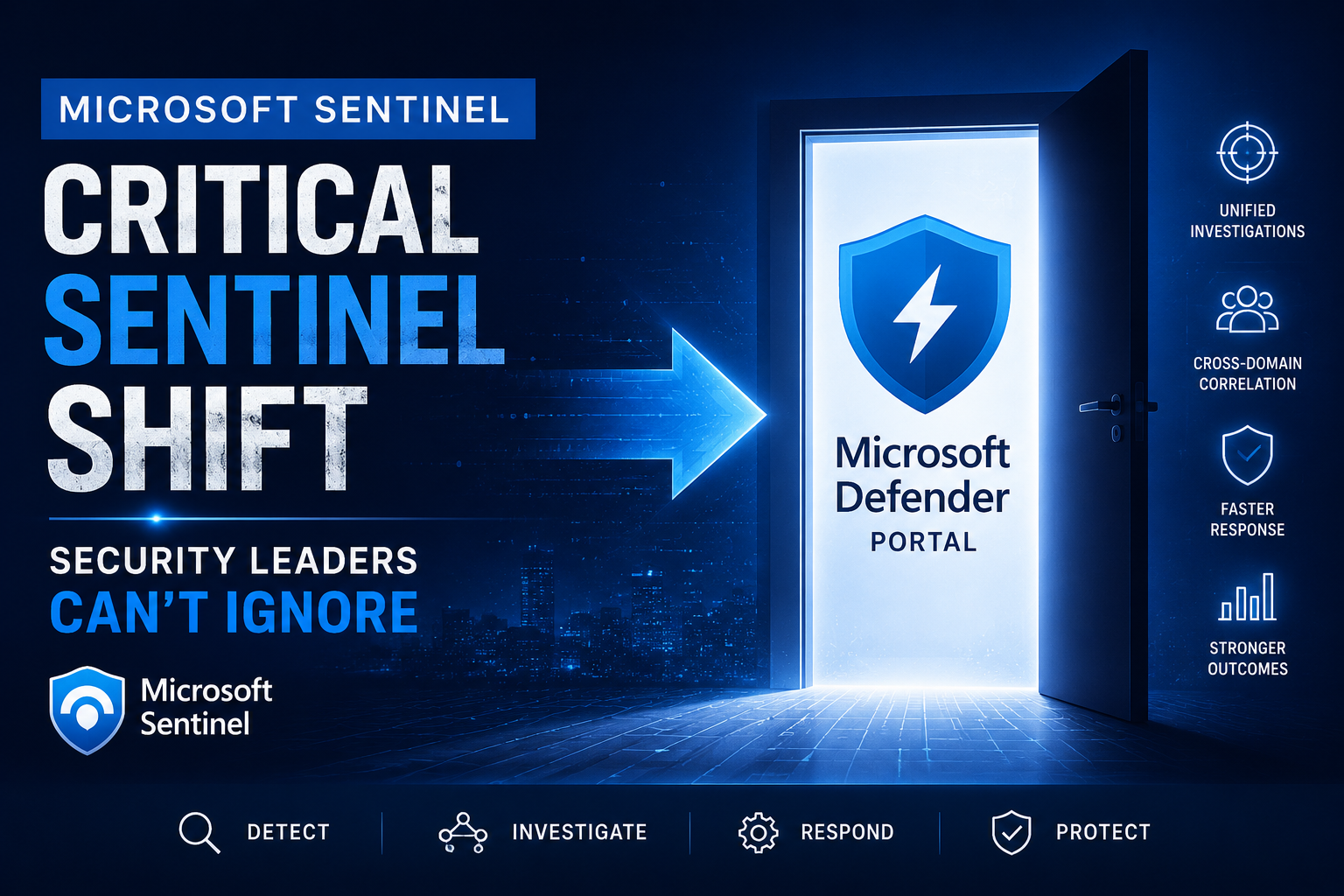
In this article, we explore the Microsoft Sentinel Defender Portal and its key features for security professionals.
Microsoft is making a major shift in how security operations are managed by bringing Microsoft Sentinel into the Microsoft Defender portal.
This post is co-authored with Tiana Sullivan, a Solutions Engineer who works directly with organizations modernizing their SOC operations using Microsoft’s security platform. Together, we’ve seen how this transition impacts security teams far beyond the interface and its reshaping how analysts investigate, correlate, and respond to threats.
At first glance, many organizations assume this transition is simply a new user experience. However, that assumption can create significant operational risk if teams fail to prepare for what is actually changing.
This Is More Than a UI Change
One of the most common things we hear is:
“It’s just a UI update.”
In reality, the transition represents a broader operational evolution.
Microsoft is converging SIEM and XDR into a unified security operations experience. Consequently, this changes how SOC teams triage incidents, investigate attacks, and manage daily workflows.
While the technology foundation remains familiar, the operational model changes significantly.
What Stays the Same
From a platform perspective, Microsoft has intentionally preserved core Sentinel functionality.
The following components remain intact:
- Your Log Analytics workspace
- Existing data collection pipelines
- Custom workbooks
- Analytics rules and detections
As a result, organizations are not rebuilding their SIEM environments from scratch. Instead, they are adapting to a new operational experience layered on top of the existing platform.
What Actually Changes
The most important shift is this:
The Microsoft Defender portal becomes the central location for incident management.
That change introduces a fundamentally different SOC workflow.
Previously, many analysts operated in an alert-centric model where investigations focused on individual alerts. However, the Defender portal experience introduces an incident-driven model that automatically correlates signals across multiple domains.
These domains include:
- Identity
- Endpoint
- Cloud workloads
Because of this correlation, analysts receive a more complete attack story earlier in the investigation process.
How SOC Operations Will Change
This operational shift becomes visible almost immediately inside daily analyst workflows.

Previous Azure Portal Workflow
- Analysts triage alerts individually
- Correlation often requires manual effort
- Context is fragmented across multiple tools
Defender Portal Workflow
- Analysts investigate unified incidents
- Cross-domain correlation happens automatically
- Context is centralized and enriched
As a result, SOC teams can improve investigation consistency, reduce manual pivoting, and accelerate triage decisions.
Furthermore, bringing SIEM and XDR together creates stronger alignment between detection and response processes.
Why This Creates Risk for Some Organizations
The biggest risk is not technical migration.
The real risk is operational complacency.
Organizations that treat this transition as “just another portal change” often underestimate:
- Analyst retraining requirements
- Workflow adjustments
- Automation dependencies
- Incident handling changes
- Cross-team operational impacts
Consequently, teams that delay preparation may encounter process breakdowns during the transition period.
The Timeline Matters
Microsoft has already established the direction forward.
After March 31, 2027, Microsoft Sentinel will no longer be supported in the Azure portal and will only be accessible through the Defender portal.
Although that deadline may seem distant, operational transitions of this scale require time for validation, testing, and organizational alignment.

Why Organizations Should Start Now
Organizations that begin planning early place themselves in a significantly better position.
Starting early allows teams to:
- Pilot the Defender portal experience
- Validate parallel workflows
- Refactor automation intentionally
- Train analysts gradually
- Identify operational gaps before migration deadlines
On the other hand, organizations that wait often face compressed timelines and increased operational pressure.
What This Means for Security Leaders
This transition signals something much larger than a portal migration.
Microsoft is building toward a unified security operations platform where SIEM and XDR function together as a single operational ecosystem.
For security leaders, this means reevaluating:
- SOC operating models
- Investigation workflows
- Incident response processes
- Automation strategies
- Cross-platform visibility
Ultimately, the organizations that adapt early will be positioned to take advantage of faster investigations, stronger correlation, and more unified security operations.
Start Evaluating the Transition Now
Organizations looking to begin validating the Defender portal experience can start with Microsoft’s official transition guidance and onboarding documentation.
Recommended resources:
- Transition Your Microsoft Sentinel Environment to the Defender Portal
- Microsoft Sentinel in the Microsoft Defender Portal Overview
- Connect Microsoft Sentinel to the Microsoft Defender Portal
These resources provide planning guidance, onboarding steps, workflow considerations, and operational differences organizations should evaluate early in the transition process.
What Comes Next
In the next post, we’ll examine the most common operational and technical risks organizations encounter during this transition—and practical ways to reduce those risks before they impact the SOC.
Because this isn’t simply a portal migration.
It’s the next evolution of security operations.
For previous blog posts, please see here