Our news
-
SOC Maturity: Measuring Progress Beyond Technology
Maturity is the most misused word in security. It is not what you own but how consistently you turn it into outcomes. Here is how to think about SOC maturity across technology, process, people, and outcomes, and how to measure real progress over time.
-
Building a High-Performing SOC Team
Modern tooling raises the ceiling, but people decide how close you get to it. Here is how SOC roles are changing, the operating model that fits the Defender portal era, and how leaders keep a high-performing team sharp and intact.
-
Automation Beyond Playbooks: Scaling the Modern SOC
SOAR playbooks automate the decisions you already made. Real scale comes from automation the Defender portal performs and you supervise. Here is the spectrum from manual to autonomous, where to automate first, and the guardrails that keep it safe.
-
Detection Engineering in the Defender Portal Era
Detection engineering has become one of the most important disciplines in the modern SOC. Here is what it means once your signals are unified, the lifecycle that keeps detections healthy, and how leaders should think about coverage and quality.
-
Microsoft Security Copilot: Transforming the Modern SOC
Security Copilot is the most talked-about capability in security operations, and one of the most misunderstood. Here is what it actually does inside the Defender portal, where it moves the metrics from Part 4, and how to adopt it without letting cost or complacency undermine the value.
-
8 Defender Portal Metrics Smart SOC Leaders Track Now
A modern SOC is only as credible as the numbers behind it. These are the eight metrics that prove the Defender portal is working, grouped by detection, response, efficiency, and quality, plus how to govern them and benchmark by SOC maturity.
-
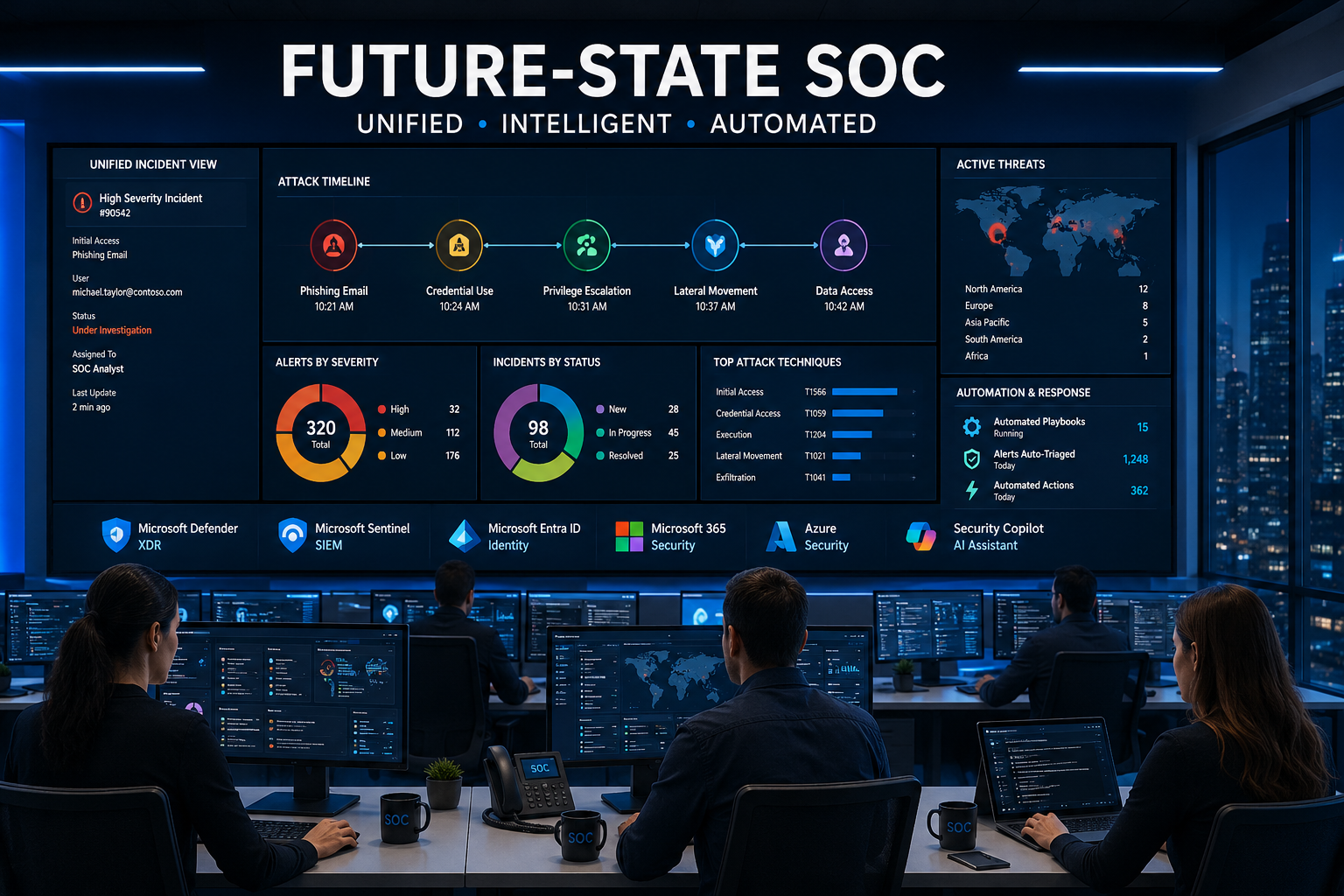
Future-State SOC Strategies Security Leaders Need Now
The Defender Portal Transition creates an opportunity to modernize security operations. Learn how future-state SOCs are evolving through unified investigations, automation, detection engineering, and AI-assisted workflows.
-
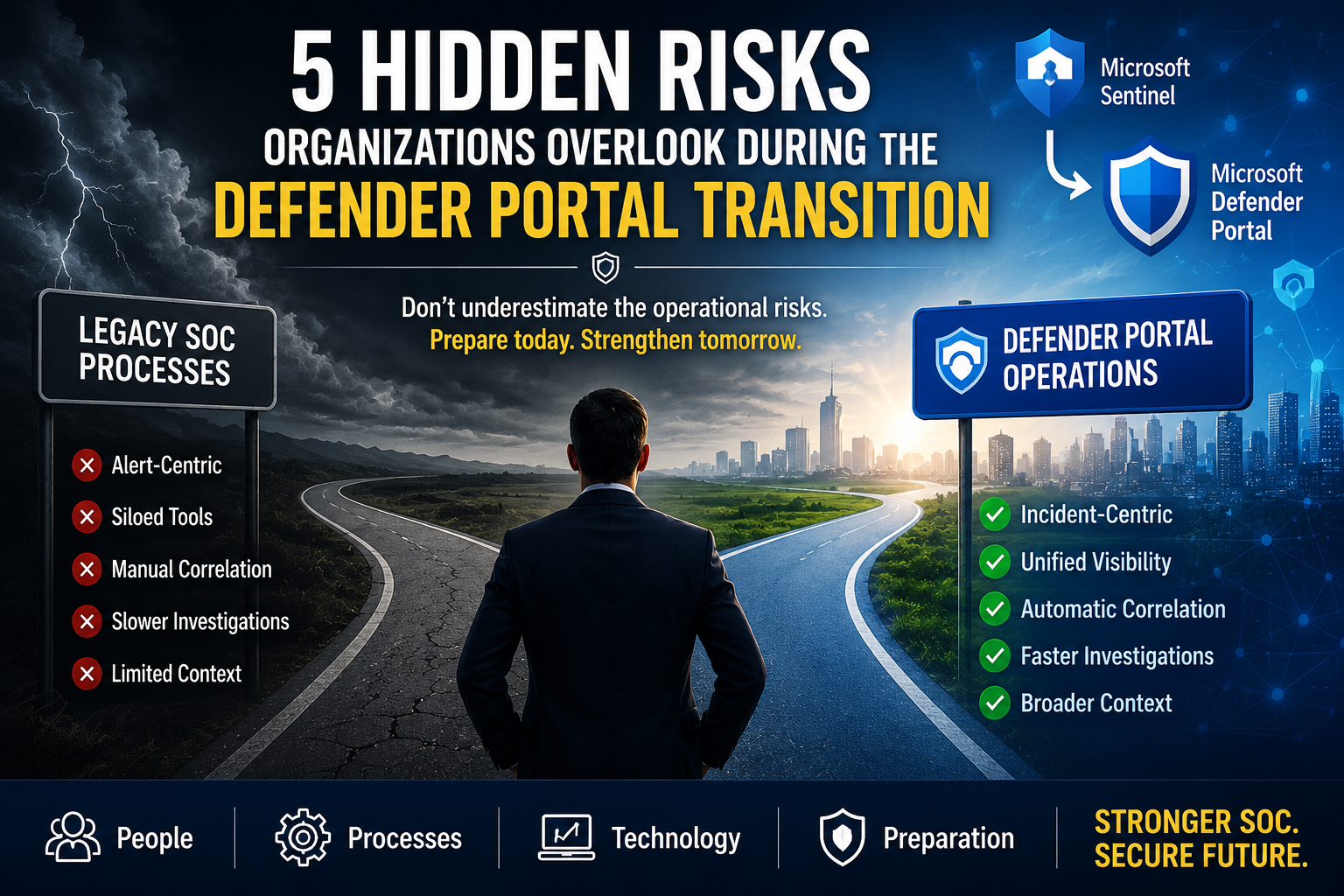
5 Defender Portal Risks Security Leaders Overlook
The Defender Portal Transition introduces more than a new interface. Discover five hidden risks that can impact analyst workflows, automation, training, and security operations—and learn how to prepare your SOC for success.
-
Critical Sentinel Shift Security Leaders Can’t Ignore
Microsoft Sentinel’s transition into the Microsoft Defender portal is far more than a simple UI update. This shift changes how SOC teams investigate incidents, correlate threats, and operate across SIEM and XDR workflows. Learn why security leaders should begin preparing now to reduce operational risk and modernize security operations effectively.
-

The Path to an Autonomous SOC: From Signals to Self-Driving Security Operations
The autonomous SOC is not a product you can deploy overnight. It is built through strong identity, signal-driven operations, detection engineering, data strategy, and AI working together. This post outlines the maturity journey and shows how organizations can move toward autonomous security operations with measurable outcomes.